In the 1860s Dinaburg became a major railroad hub. Two railroad routes pass through the town – St. Petersburg – Warsaw and Riga – Orel. After the construction of the railroad, trade in linen, leather goods, wood and grain grew in Dinaburg. Daugavpils began to develop as a large industrial and trade center.
The development of trade in Daugavpils was also influenced by the abolition of serfdom in the Russian Empire in 1862. Daugavpils became an important trade center, where local fishermen and gardeners came to trade their products.
Behind Riga Street, Moscow Street (now Fortress Street) entered the strip of markets. To the left was the Big Market Square. It was located between Aleksandro-Nevskaya (now Vienibas), Vladimirskaya (now Gymnasias), Officers’ (Lachplesha), and Riga Streets, with the cathedral in the center of the square. In 1862, the market burned down, and in its place the Alexander Nevsky Garden (now Andrej Pumpur Square) was organized.
In the 1880s, along Riga Street, a “New Guest’s Row” was erected – a stone one-story building on a high foundation with a large basement and a canopy, which existed until the 1960s. The area between it and the garden was not built up and was used as a village market. In 1937, a multifunctional center, the Unity House, was built in its place.
In the rest of the square, until 1937, there was the “Iron Row”, where iron and household goods were sold. After their demolition in 1937, a cobblestone Parades Square was created, where the city parades were held, with 60 small trading houses along its edges. In the 1960s, a hotel complex grew on the square.
Behind the esplanade line of the fortress, to the right, were the shopping areas: Bread and Hay, and the Fish Market. In their place the city central market was formed, which has preserved its functions up to nowadays. The Esplanade was quickly becoming the commercial center of the city.
Ogorodnaya Street (now Sakniu Street) started from Moskovskaya Street, from the Big Market Square with its “iron rows” and stretched to Podolskaya Street (now Stacias Street) near the Riga-Orlovskaya railroad. The convenient location of the street – near several markets – determined the occupation profile of the inhabitants. They were oriented towards the peasants who came to the markets. There were stores for kerosene, herring, yeast, sugar, flour, rubber and other footwear, a weight-repair store and a tinsmith’s shop, and the yards of Manevich and Segal.
Trade did not subside even during the First Republic. In the thirties, there was one merchant for every 24 inhabitants. In 1936, a new and more modern shopping area was designed. A central market pavilion was built between Cietoksznia, Sakniu and Dagdas streets. Nearby, a “People’s Market” was planned for hay and horse trading. The fish market was enlarged, improved and became known as Viestura market.
Activity at the market began at 5:30, because before selling the products it was necessary to pass the sanitary commission. And there were a lot of products – according to the press of 1938, on Wednesdays and Fridays about 1000 farmers and traders came to the city market to offer their goods. For example, the company “Latgales piens”, founded in 1932, could not satisfy the needs of the townspeople in dairy products, so every trading day, about 300 milk sellers sold their products.
In addition to dairy products, the fish market was also in demand. In 35/36 years Daugavpils fishing society sold 325 tons of fish. It sold not only local freshwater fish, but also cooperated with sea fishermen, who delivered sea fish to our market.
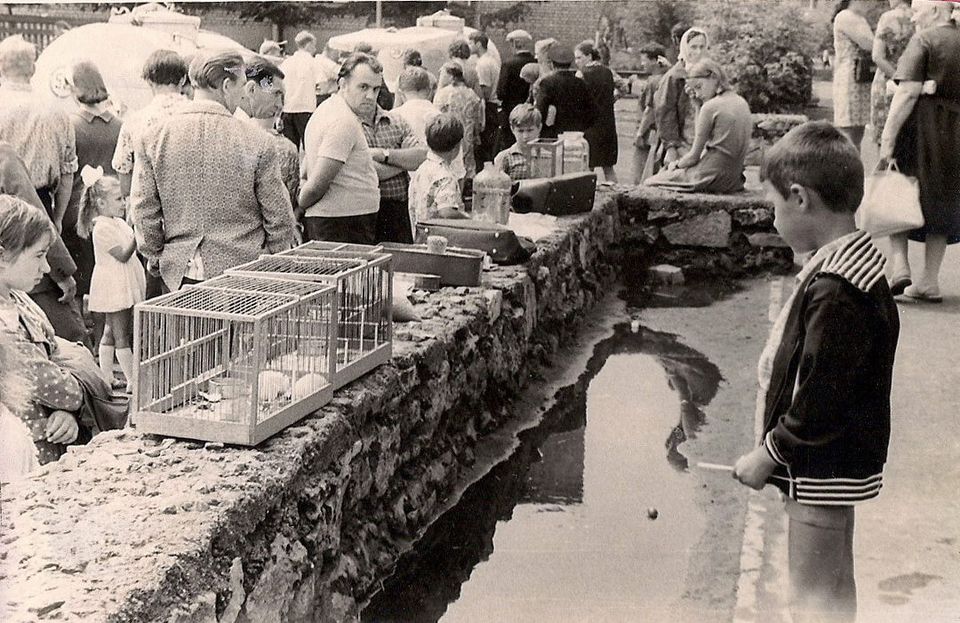
Twice a year – in early spring and fall – a horse market was held in the city. It was also possible to get veterinary advice there.
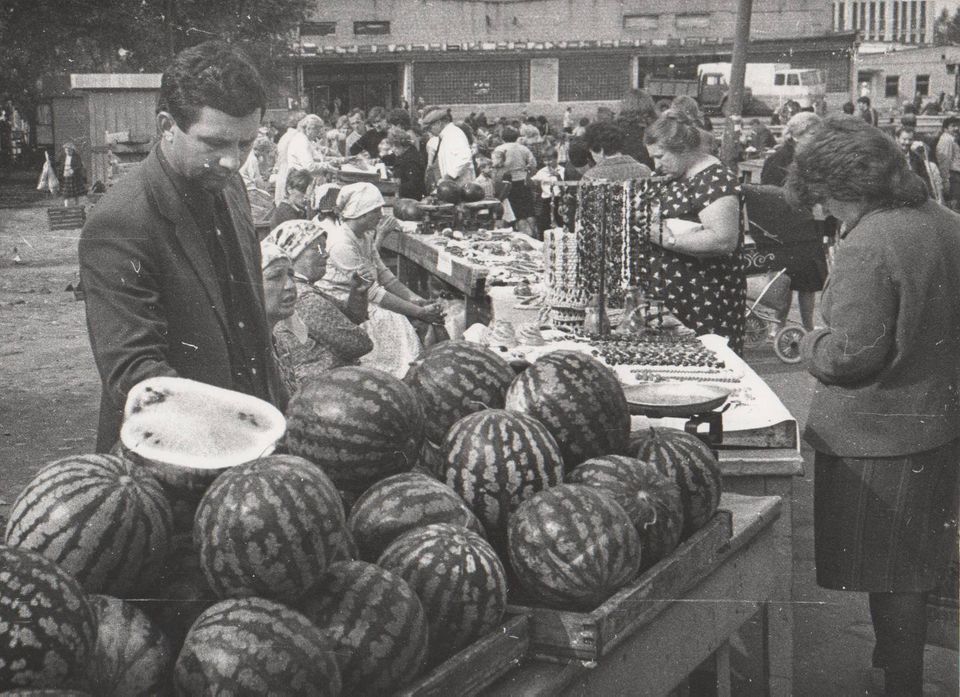
In the 50s of the 20th century, together with the post-war Daugavpils, the market was also restored. The central collective farm market was full from early morning. There was not enough space, so bags with fruits and vegetables were placed directly on the paving stones, and meat sellers had to wait for a long time for their turn near the pavilion. By the way, eco-friendly packaging is not a modern invention – already in 1959 fruits and vegetables were sold in paper sacks. Potatoes, the most popular root vegetable at that time, could also be delivered to the house using the transport of the trade organization.
At the beginning of the 21st century, the appearance of the central market began to change. At the beginning of 2002, the shopping pavilions “Passage” and “Hansa” were put into operation, the next year – “Empire” (now “Gallery”), and now the shopping center “Ditton” is the largest shopping center in Latgale, uniting under one roof both popular brand stores and green market, continuing the traditions going back to the 19th century.
Gallery
21 images. Click to view gallery